Happy Thanksgiving!

Kev finally woke up this morning and was able to say his name. He got the year correct, but guessed that it was July. He’s stable and aware. That is all the blessings I need on this day of Thanksgiving.

I spent the night in his room and watched as he went from not being able to keep his legs or arms up in the air at all, to being able to hold them up to the count of ten. I’ve never been so proud of him!! I was finally able to get some sleep and now I am sitting in the cafeteria waiting for shift change on the ICU to be over so I can get back on the ward. The sun is starting to rise and the clouds and trees are glowing with the sunlight that will grace us for the first hour of today. It is one of those mornings where I feel as if I am standing on God’s front deck looking out at the wonderous creation put forth as our playground.

Speaking of playgrounds, I had to cancel all my holiday plans for the end of this week. And I had it all planned out so well! I was going to have coffee with an old friend before going to a potluck at a new friend’s house. I was going to spend tomorrow morning with my fiddle teacher and her kids playing in the playground by my house before going to a Friend’s Giving dinner with my soccer teammates. Instead, I will be here at the hospital waiting for my parents to arrive when I will then go home, take a shower, and sleep. I didn’t sleep much last night, but I don’t mind at all. I was holding my brother’s hand when he woke up and started gagging on his nose tube. The poor guy. They have to keep his hands restrained until the drain tube is taken out, which may be a few more days if we’re lucky. . . longer if Lady Luck decides to skip town for the holiday. I will hunt that bitch down if she leaves my brother stranded.

The guilt has finally started to creep in. There are so many things I feel horrible about:

  • I let my brother clean up his own vomit before the shit really hit the fan. Why couldn’t I have been a good enough person to wipe up the mess for him?!? Am I doomed to be a miserably selfish person who can’t even help my brother when he pukes?? How callous can I honestly be??!
  • I didn’t ride in the ambulance with Kev and I arrived too late to give them the earliest warning possible about his severe altered mental status. Would it have made a difference? I don’t know. But I think I wouldn’t feel so damn guilty about not being here when he needed me the most. At least I can hope that someone in that room, or in the hallway, listened to my words and will not make the mistake of assuming anything about a person in need of medical care in the future. Why is it so difficult for us as humans to keep an open mind when we encounter strangers?
  • I feel bad I wasn’t nicer to the chaplain. He found me this morning in the cafeteria, but I still don’t want to talk with him. I simply do not want to go through the inane formality of small talk. I have never enjoyed small talk. My brother and I are twins in this regard. As friendly and helpful as the chaplain is, I simply am not in the mood to talk about my job, or where I live, or what books I like to read, or any of the other meaningless shit that people concern themselves with when trying to be ‘nice.’ I don’t effing want nice! I want to spend my mental energy and social efforts engaging about issues that are interesting. I would love to get into a conversation about God and the origin of existence, but not while I’m concerned with only knowing if my brother will be okay or not. I wish I were a nicer person, and I feel guilty about not being a nicer person, but. . . oh, well.

I guess my baptism worked. Guilt is embedded within my soul.  I may not be a practicing Roman Catholic like my family, but damned if I didn’t manage to internalize all the sinful woes of being alive. I don’t pray to God because I do not believe in God. I am not atheist, or agnostic. I simply do not believe in any version of God that man has created because that version is only a timidly pale comparison to the real deal that our puny human minds are incapable of perceiving. I can understand the comfort to be found in having a simple three-letter word to describe something beyond description. I will at times self-identify as Spiritual, but then that starts getting closer to all the New Age mumbo jumbo that I am equally averse to. So, where does that leave me? Either saved from my doom, or doomed from my Salvation, I suppose. Either way, does it even matter?

I have one last guilt clawing at my conscience this glorious morning. I want to go home and do all the things I had planned for today and tomorrow. I have an apple crumb pie from Sweet Life waiting to go to a potluck and be eaten by a bunch of people I was looking forward to spending time with. What am I going to do with a pie and no one to eat it? Honestly, that’s the last of my worries, but it bothers me that my plans changed so suddenly right before they were about to come to fruition (but, let’s be honest, that doesn’t bother me nearly as much as the reason why I’m not following through on my plans). At least I have one silver lining that has allowed me an opportunity to focus on something good that has come out of all this mess.

The reason why I couldn’t ride with Kev in the ambulance, or immediately follow in the taxi, is because I have learned how to take care of my diabetes without thinking too much about it. It has become instinctual. It has become an inherent component of my existence. Without my ability to monitor and take care of my diabetes, I may very well have ended up being a second casualty for the paramedics when they arrived at my front door last night. Or, I may have woken up feeling very sick this morning from high blood sugar and having no way to manage it without leaving my brother to go all the way home.

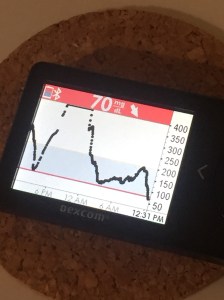
I was on the phone with the 911 dispatcher when my pump decided to beep at me for having a low reservoir. If I hadn’t taken the time to change my insulin before heading to the hospital to spend the night then I would definitely not be feeling as healthy as I do this morning. I would not have been able to be here to talk with the neurologist who will be performing his angiogram in thirty minutes. If I had chosen to ignore my own health in preference to my brother’s, then both of us would be suffering more than we are at this moment. The other moment last night I am rather proud of myself for was when I was on the phone with my mom before the paramedics showed up and, as I was talking with her, I could feel something was not right. I immediately stopped what I was saying and doing, and told my mom I needed to check my blood. She waited patiently on the phone while I came to the realization that I was at 66! I opened the door for the paramedics while still trying to suck down my juice box and prevent myself from becoming incapacitated as well.

My brother is in for his angiogram. They will hopefully find the bleed and be able to fix it with a catheter, or they may find nothing at all. Worse case scenario is surgery, but keep your fingers crossed, please!! My parents are just south of Portland and will be here with me soon. All my friends are keeping me cheered with texts full of love and support. The ICU staff is amazing and a blessing!! I actually have so much to be grateful for today I can’t help but to think every Thanksgiving from now on will somehow be pale in comparison as well.

There is a piano in the main lobby, but since I can’t play it, I am planning on bringing in my fiddle later and practicing my Christmas music here at the hospital. I will bring some holiday joy to this party!!! Tis the season after all. . .
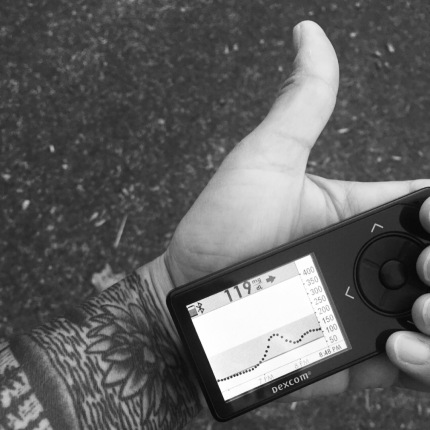
day 5: ***MY diabetes***

Diabetes.

I wonder what my life would be like today if I did not have diabetes.

I would be employed. If diabetes had never entered into my existence I would most likely be employed as a middle school Social Studies teacher either somewhere in the Bay Area (probably Oakland) or in Reno. I would work during the school year, volunteer my time helping my community, climb in the local gym with my friends, and climb outside on the weekends with those same friends. That was the life I expected to create when I first moved to the South Bay Area in 2003. As a result of the opportunities I experienced while living in the South Bay, there is a good chance I would still be working as a mountain guide in southern Yosemite during the summer seasons as well.

I think I would be married. In fact, I know who my soul mate was that I should’ve had children with, but Life tore that possibility away from me with more devastation than simple diabetes. I will live the duration of my life with conviction about the primordial axiom: LIFE IS NEVER FAIR.

Those are the two biggest sacrifices I believe I have had to make because of my diabetes: career and family. Instead, I find myself having to imagine a new life for my future. Diabetes effectively killed my ability to begin a career in education during my early thirties. Now, in my early forties, I find myself struggling to want the same life I had imagined over a decade ago. The life I want to live now centers around the mandatory routines I must perform in order to feel healthy and to have the physiological capacity to accomplish the routines of daily life.

My diabetes has never been easy to manage. All the facts listed about diabetes in the medical literature sometimes fail to be accurate in my personal experience.

Last January, I was in the hospital for Diabetic Ketoacidosis caused by Influenza. It was a condition where my blood glucose levels had become so high they made me very sick. I spent two nights and two days in the ICU until my glucose levels were brought back down into range, and the dangerous ketones in my blood were flushed out of my system. By evening of the second day, a bed finally opened up and I was transferred to a room in the main ward, with the expectation that I would be released from the hospital in a couple of days.

I closed my eyes that night believing I would sleep, wake up, eat breakfast, talk to my doctor, and then get well enough to leave the hospital the next day. Instead, I woke up around 1:00 in the morning feeling sick from high blood sugar. My nurse came and, after checking my blood sugar, we learned that it had risen above 250 (100-120 is considered to be a ‘bull’s eye’ target range for us diabetics). Blood sugar levels, according to the medical literature, rise only when carbohydrates are eaten (the medical community has only recently begun to understand the connections between glucose levels and stress). I had not eaten anything and my stress levels were lowered because of the treatment I believed I was receiving. So, why was my blood sugar steadily climbing? Why was my liver kicking out glucose into my system while I was peacefully sleeping? These are questions no one has ever been able to answer for me.

What I do know is what happened next:

My nurse called the nighttime on-call doctor to get permission for administering insulin to lower my glucose levels. My nurse was amazing! He did everything in his power to try and help me. In fact, my nurse was a Type 1 as well (diagnosed at the age of 27) who was using a pump. He knew exactly what I was suffering through. He even mentioned how much he wished he could just give me some of his insulin to help, because the nighttime on-call doctor NEVER called back to give permission for my glucose levels to be lowered to a healthier level. We never learned why. No one ever told me why I was allowed to lay in my hospital bed, the first night out of the ICU for DKA caused by high blood sugar, and have to suffer through the sickness of having my blood sugar climbing uncontrollably. By shift change at 7am, my day nurse arrived in time to hand me my second vomit bag for the morning because I was uncontrollably nauseous–AGAIN!

The daytime doctor finally arrived to begin her workday and managed to prescribe me some corrective insulin, but I was now required to stay in the hospital another night because my blood sugars were out of range. Also, by this time, my electrolytes were wacked and needed to be replaced. I was put on a magnesium drip that was expected to finish in a few hours, but it burned so bad going into my arms I could only handle the pain for an hour or so at a time. We were constantly moving the IV between my arms. It was the first time I have ever needed to have more than one IV. I finally managed to finish the magnesium bag by the end of the day.

I spent two more days in the hospital because my doctors were incapable of bringing my blood sugar levels down into an ‘acceptable’ range. I was not able to administer my own insulin intake because my pump resevoir was empty (a mistake I will never make again!) and I was reliant upon the doctors to administer the ‘correct’ amount of insulin for my health needs. The problem with relying upon doctors is that they follow the ‘established medical guidelines’ as to how much insulin to administer. Again, the problem being that I do not always fit into the ‘acceptable target range’ of what the doctors expect from Diabetes. The amounts of insulin they were providing me with were simply insufficient to the task of lowering my glucose levels.

***Here is the crux of my agitation with the medical community: they are terrified of insulin! My doctors were so afraid of administering too much insulin, and dropping me into hypoglycemia, that they were simply unwilling to listen to ME and give me the amounts that I KNEW to be what I needed!***

I feel justified in making this statement: I KNOW MORE ABOUT MY DIABETES THAN THE DOCTORS EVER WILL.

I don’t remember my second night on the ward, but I do remember my blood sugars never lowering into range during my second day spent in that ward. My third night, however, was spent with a different nurse and I remember this night very well. By this time my doctor had left a standing order for insulin to be administered when needed. My new nurse was not a native english speaker. I freely admit I pushed her for the right to determine how much insulin I was administered. When I ate dinner that night, I estimated the carb count for my meal and entered the numbers into my pump for the Wizard program to do the math. The hospital menu I was allowed to order from (as a diabetic) had the carb count of each item listed. As a diabetic, I was allowed to only order so many carbs at a time. I ignored the damn menu’s carb count. It did not match the estimate of carbs that I had learned to make over the years by looking at the food I was going to eat in front of me, and then determining how each item of food may affect my blood sugars from past experience. I told my nurse to give me the amount of insulin suggested by my pump. I had to round the number up to the next whole amount because syringes are incapable of providing the small amounts of insulin the precision of a pump can deliver.

My next blood check was two hours after I ate and my number was not too high. The nurse wanted to wait another three hours before checking again, but I told her to come back in an hour before I went to sleep. I was not using my own test strips because I only had two left (another mistake I will never make again!) and I needed them for the ride home once I would be allowed to leave the hospital. In an hour my blood sugar had dropped to 75, which is close to technically being labeled as hypoglycemia, but is also typical in my daily life experience. I asked the nurse for some ’emergency’ carbs and she brought me two pieces of toast and some peanut butter. I could tell how nervous she was from my blood sugar being so low. Maybe she was simply worried because she had allowed me to tell her how much insulin to administer rather than giving me the amount the doctor expected for the meal I ate, but I am used to this nervous reaction from medical professsionals when confronted with a glucose level ‘too low’ for their comfort.

Knowing my diabetes as intimately as I do, I knew only one piece of toast with peanut butter would be sufficient. The nurse was worried that I didn’t eat the second piece, but I comforted her by telling her I would keep the toast next to my bed in case I needed it later. Now that she knew I had corrrected my low with the ‘correct’ carbohydrates my nurse felt safe leaving me alone for the night. The doctor had required my blood to be checked every three hours, but I told her to come back in an hour and wake me up to check my blood again. I am not ashamed to admit I pushed the nurse again for my healthcare to be provided to me the way I needed it to be. And it was a good thing that I did push her because, within that single hour, my blood sugar had risen to 170 from a single slice of bread, and I needed to tell the nurse how much corrective insulin to administer. This time I was confident enough to let her wait the three hours to check my blood like the doctor had determined.

During the rest of the night my glucose stayed steady and in range. When I had my first check in the morning before the doctor came in I was at a beautiful and healthy 117! All because of my determination to ignore everything the doctor wanted to be done for me. Unfortunately, I had to remain in the hospital for the entire day because I allowed the doctor to make the determination for my insulin during the daylight hours. . . and my sugars never came back down into range after my first meal of the day. In fact, I only ate two small meals that entire day, and my glucose levels never reached my target range because of my doctors unwillingness to listen to me when I tried to tell her how much insulin I should be given.

By five o’clock that evening I firmly informed the doctor I was leaving the hospital despite her belief I should stay another night for observation. I told the doctor that the only time my blood sugar levels had been stable during my entire stay under her care had been during the previous night when I had been in complete control of my diabetes. This was not the first time I have had to call out a medical professional for treating diabetes as if it were a cookie-cutter disease that affects everyone in exactly the same way, nor do I expect it will be the last, but it was the first time I ever forcibly had to advocate for myself with the belief that I do know more than my doctor about how to manage MY diabetes.

*********************************************************

The life I now live is a Diabetic Life. It is the only life I will ever know for the rest of my life. I have no option to live any other kind of life. Diabetes is my lot in life. Fortunately for me, I am learning how to live my life as a healthy diabetic with my blood sugars under control. It was my nine years spent working at the pool that allowed me the opportunity to learn how my diabetic life would be able to work for me. Without my experiences at the pool forcing me to become more aware of the effects diabetes has upon my personality, I believe there are several emotional and behavioral manifestations of my diabetes, and the way it affects the people around me, that I would still be ignorant of and incapable of mitigating within my public and social spheres.

I am grateful for my experiences at the pool. I am a better person for having had to deal with all the struggles. I have a clearer understanding of who I am and what I need in order to be healthy. I have gained a secure level of self-confidence I do not believe I would be capable of without having had the experience of fighting for my survival in an environment of pervasive harassment. The pool created a crucible in which my comprehension of what it means to live a diabetic life led me to recognize and become aware of the hidden and confusing ways in which discrimination can manifest itself in our daily lives. Learning to navigate the various forms of gender and racial discrimination I face everyday as a black woman were nothing compared to the experience of being discriminated against because of my invisible disability. Simply coming to the realization that I am in actuality ‘disabled‘ was a trial of self-awareness I may never have accomplished without my experiences at the pool.

I am not sharing my story to hurt the pool, or the people still working there. My goal is nothing more than to make the pool a better place to work. I want the pool to be a place where a black woman with diabetes can safely work without being hassled by her bosses for being a ‘bitch.’ Period.

one life to Live

In January, I had the flu. . . . . . . . . . . . . . . . . . . . . . . . . . . . . . . . . . . . . . . . . . . . . . .

IMG_2200

Not much of a news flash, I realize, but I was unable to stay hydrated and I failed to keep my sugar under 250. The end result was two visits to the Emergency Room in one day with a diagnosis of DKA and Influenza.

I never felt exceptionally sick from the flu. The first night in the intensive care unit was the worst because my nose was clogged and I hate not being able to breathe freely. Worse than blocked air passages, though, is vomiting. At least, for me it is. I HATE nausea. I hate feeling like I’m going to throw up and I hate the act of vomiting. I bring this up only because my story today revolves around the four times in my life when nausea has truly been an issue for me. It is rare for me to have issues with my stomach being unhappy. I am generally an exceptionally healthy individual–except for my broken pancreas. And that is the common thread among ALL four of my most horrendous encounters with nausea.

The first time was in early 2000 while I visited my parents in Bremerton, Washington. We had pizza for dinner and, sometime in the middle of the night, I woke up and started vomiting. And I didn’t stop. Even after the only thing coming up was sickish-green looking bile. By this time I had made it down the hall to wake up my parents, which was awkward only because I was 25 and of the belief I shouldn’t have to wake up my mommy to take care of me. Only I needed her that night. I distinctly remember one moment kneeling  over the toilet bowl and my mom lovingly asking me if I wanted any left-over pizza. (I know when you read this, mom, that you will feel guilty–but DON’T!!) This memory still makes me cringe and grin simultaneously.

I spent the next few days not able to get out of bed except to limp into the bathroom to take a hot shower in the hopes of relieving the extreme pain in my lower back. The showers never helped me though, because, as I know now, the pain was in my kidneys and had nothing to do with my muscles. In retrospect, I can look back to this episode and realize it was an attack of acute pancreatitis that should have put me in a hospital bed–if I weren’t such a strong and stubborn individual. The question has now, in the intervening years, become like the question of the chicken or the egg: Could it have been my undiagnosed diabetes causing the pancreatitis, or did the pancreatitis create my diabetes?

The answer doesn’t matter. What does matter is the fact that my next encounter with nausea was in 2008 while I was living in Las Vegas and was diagnosed with insulin-dependent diabetes. I shared that particular horror in a past post and have no desire to embellish again. Suffice it to say that being 25 before my first encounter with nausea, and the fact that it was eight years before the next encounter, goes far in proving my point that nausea and I do not share a close relationship–diabetes links us despite my general imperviousness for nausea.

My third encounter was approximately five years later while I was living in Eugene without health insurance. I was buying my insulin (Regular/NPH) over the counter, along with my syringes and strips. This regime had sustained me through my first year after diagnosis in Vegas and during the first few years of residing in Eugene. At the time, living without a diabetic support team, and having experienced debilitating hypoglycemic events, I felt compelled to maintain my sugar around 200. Eventually, this led to my second experience with, but first diagnosis of, Diabetic Ketoacidosis. The day started with my decision to ride the long way to work so I could stop at McDonald’s and get a couple egg mcmuffins to start the day with. I made it to Mickey D’s, but I had to call in sick to work while in the parking lot because the nausea had become so intense. I went home, started throwing up, and finally called a friend to take me to the hospital.

I was in the hospital for four days. I started on Lantus and Humalog, was enrolled with State-covered health insurance, and started visiting an endocrinologist regularly again. I may have recovered from the severe consequences of high blood sugar, but I was once again a victim of the severe side-effects of insulin. After a couple of years, I finally made the decision to switch to pump therapy in the hopes of relieving the hypoglycemia. My journey of making the transition from syringe to pump is a story I’m saving for another day (but one well worth the telling).

My fourth, and currently final, encounter with nausea was in January of this year. I was sick with the flu and I did what I was supposed to do: stayed home and rested while trying to stay hydrated. But it didn’t work. I kept throwing up after drinking water or Gatorade. I finally decided at three in the morning to call a taxi to take me to the hospital. The waiting room was quiet and the wait wasn’t long. I was eventually sent home by 6:30 with the instructions to stay hydrated. I had gone in telling them that my sugar wouldn’t go below 250 no matter how much insulin I added (and how that worried me because it is ALWAYS terrifying to stack insulin knowing it will most likely ALL kick in at the exact same moment–and THEN start to finally work within a five minute time frame). But the doctor simply said, “you do have some ketones in your blood, but just stay hydrated.”

So I went home and tried to stay hydrated. My stacked insulin never kicked in and my blood sugar stayed high. I finally called a friend at 6pm to take me back to the hospital. This time the waiting room was packed. I sat and waited until almost 9:00 before finally being admitted. I had started vomiting again around 7:45 and spent the last hour of my wait sitting in the corner with a vomit bag slowly filling up while I cried on the phone with my mom wishing someone would come and help me. By midnight I was diagnosed with Influenza (again) with complications of non-coma Diabetic Ketoacidosis (the exact reason why I had been in the exact same hospital twenty hours earlier with the hopes of avoiding).

They needed to put me in intensive care, the only problem being that there wasn’t an available bed anywhere in the valley: Eugene/Springfield, Albany and Salem were full of Influenza patients. I was told at midnight that I would be transported by ambulance to Oregon Health Sciences in Portland. I said OK and went back to sleep. I was awoken at 1:30 and told that my diagnosis had put me on the top of the transport list and I would be flown to Portland. I said OK and signed the paperwork they handed me. By 2:30 I was wrapped to a gurney and transported, in my first ambulance ride, to the Eugene airport and put on a private jet. There was just enough room for my gurney, my two medics, and the pilot. I admit to being disappointed it wasn’t a helicopter, but a private jet ride still ain’t too shabby.

By 5:00 I was tucked away in the medical intensive care unit at OHSU and feeling just fine, now that my sugar had finally been brought back down into range long enough to give nausea-theunwelcomehouseguest a welcome kick in the arse. I spent a total of three days in the hospital, which was asinine and a direct factor of the complete incompetence of some medical professionals to comprehend diabetes, let alone how to efficiently treat it without the benefit of listening to the person who experiences living with her diabetes EVERY SINGLE DAY (again, another story for another day).

I don’t know if I would experience nausea in my life to the extent that I do if I were to have a functioning pancreas. What I do know is that I appreciate nausea for always being a sincere and accurate indicator of severe problems associated with my dysfunctional pancreas. I despise nausea, but I respect it enough to always listen and pay attention. The parameters of my life were dropped on me without the benefit of options. Sometimes, I am so jealous of the Type 2’s who are able to reverse the effects of diabetes with exercise and lifestyle changes. I wish I could simply make a change in my life that would have the effect of minimizing my experience with diabetes, but all the changes I am forced to make are changes necessary for my ability to survive the process of using the only substance known to keep me alive.

At times it feels incredibly unfair. At other times it feels completely natural. After all, this life is the only Life I have to live.

The CGM Life

IMG_2405
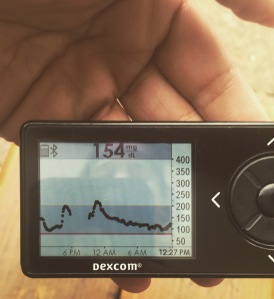
An amazing glucose reading after having a beer with friends

There are many aspects of diabetes too excruciating to wish upon your worst enemy. The finger pricks for a drop of blood large enough to satisfy the insatiable hunger of the glucometer (if you are even lucky enough to bleed when you poke), the invisible disability of hyper and hypoglycemia (we may not show it, but we can damn well feel it), the mandatory diligence required to eat a small snack of fruit (yes, there are carbs in

IMG_2288
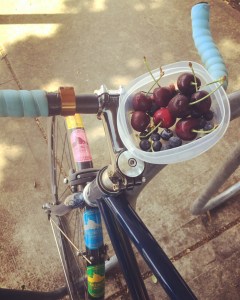
Small snack to boost glucose levels before riding

food other than junk food), and the unsolicited advice provided by well-meaning individuals who are unaware of how deeply their ignorance dwells (no, the phrase “my Aunt Gertrude had diabetes” is not relevant to a type 1 diabetic’s existence).

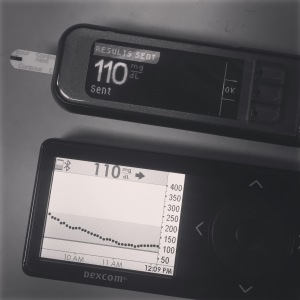
For me, one of the worst parts is the unrelenting beep, beep, beeping of the damn continuous glucose monitor during the darkness of night when every sane human in my timezone is peacefully asleep because they have a functioning pancreas. The first few beeps always get ignored. Partly, because a part of me thinks “it will go away” and the other part smartly says, “it will go away.” But it NEVER goes away… it just gets LOUDER. Rolling over and simply turning off the alert is always a possibility, but I’ve learned it WILL NOT GO AWAY if all I do is ignore it. So, I am forced, at 2:23 am, to wake up enough to turn off the alert on my cgm and to enter the damn number into my pump so it can provide me with a correction of insulin to bring me back into range–the way my pancreas is supposed to do on its own without waking me up.

Granted, there are just as many times when my cgm yells at me because I need to quickly consume some carbs and refrain from dancing on Death’s front door in my sleep. I am grateful for the lifesaving protection of my cgm. I feel naked, exposed, vulnerable and fairly helpless when I am not wearing my continuous glucose monitor. To not know the trend of my blood sugar scares me because I have experienced the trauma of being caught unaware by a tempestuous low.

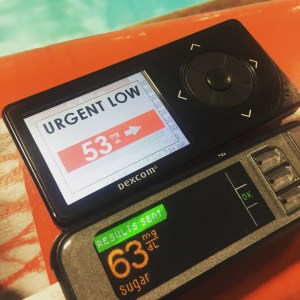
But, I was not always so attached to my cgm. It actually took months before I was willingIMG_2312 to wear it continuously. At first, it was because I wanted to continue enjoying an undisturbed night of sleep. Then, there was the frustration that came from having the damn alarm scare the crap out of me with a reading of 43 only to learn I was actually at 65. They may both be scary to most people, but, for me, being in the 60s isn’t much of a concern. I have always had a high tolerance for a low blood sugar. It has saved my life on numerous occasions, so I have learned to not question, but simply to accept with joy.
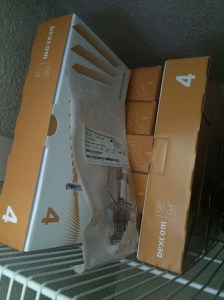
At first, my insurance company played coy and couldn’t ‘find’ the prior authorization needed to supply me with the sensors required for the continuous glucose meter to work. I spent six months calling and speaking to a new person at the insurance company. I would always ask for the name of the person trying to help me on each call and, every time I called back, none of those people were ever acknowledged to work at the company. At the time, I didn’t use the sensors with regularity because I didn’t have the hundreds of dollars I was being charged each month for a sensor that only works for seven days. I started hoarding my sensors against the day someone would stop sending them to me.

IMG_2418Finally, a day came when I looked in my closet and I saw enough boxes of sensors to make me feel secure. I felt comfortable in knowing I could wear my cgm continuously and not worry about running out of supplies. One other key revelation helped me to feel the sense of security that allowed me to let go of my need to control the amount of sensors I had on hand: I learned how to make a sensor last for longer than seven days!
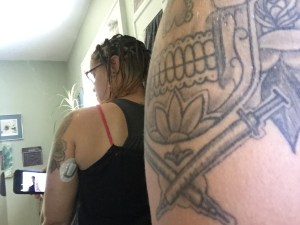
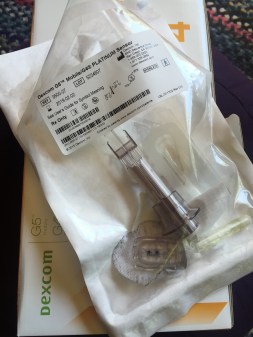
I wear a sensor for my cgm every day now. Usually, I put them on my thighs, abdomen, or above my butt cheeks, but today I put a new sensor on my arm. It’s not that I’m

IMG_2419
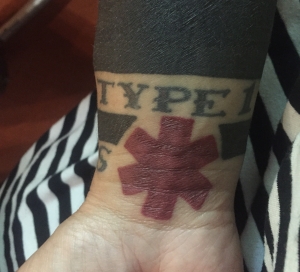
Tattoo celebrating my diagnosis… sugar skull with needles as crossbones

embarrassed to wear my sensor in a visible location… I’m too old to be embarrassed. I just don’t put the sensor on my arm because I have tattoos that I don’t want to cover up and that leaves very little space with which to play with. Recently, I have started connecting with other type 1 diabetics on social media and I see how proud they are to wear their cgm sensor in the open. The last time I wore my cgm sensor on my arm was shortly after first getting one, and I couldn’t get it to stay stuck on my stomach (another lesson learned: the importance of Mastisol in prepping a site).

IMG_2346
A good streak with a sensor change-simply hit ‘stop sensor,’ wait a few minutes and hit ‘start sensor’

I am no longer afraid of the insurance company denying me access to my supplies. I do not expect this truce will last forever, but I am going to enjoy the peace while I can. I don’t know how long the government will be willing, or able, to provide me with the supplies that are necessary for me to live a life of “freedom” and the “pursuit of happiness,” but I am willing to work part-time at minimum wage as a lifeguard in order to NOT make enough money to be forced to pay for my supplies. THAT, I have learned, is the full truth behind a diabetic lifestyle… sacrifice.

IMG_2416
All the waste from one sensor change

I have not only had to sacrifice my health, life expectations, life expectancy, choices in food and activities, privacy, and social perceptions caused by my disability, but I have been forced to sacrifice my ability to live a life free from the stress caused by fighting with a recalcitrant insurance company. I have willingly had to sacrifice my right to feel secure in my chances of living a safe and healthy life month-to-month.

One would think that with so many sacrifices on my mind I would be willing to do what was necessary to give myself the greatest chance of success at a long and healthy life by doing everything necessary to maintain excellent control over my diabetes. Unfortunately, there are some sacrifices I am not willing to make: the sacrifice of NO beer, of NOT eating out with friends, or of living in FEAR.

IMG_2257
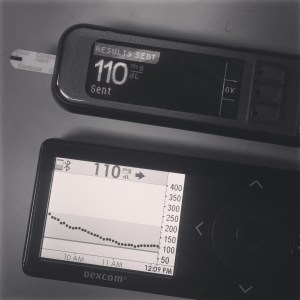
So rare, yet so exciting!

I do not know how long I will be able to rely on the State to provide me with the means to stay alive and live my life (…I am aware of how my government is not even concerned with basic Human Rights…), but I choose to continue on my path with the belief that everything will work out in the end. I have my stockade of sensors and my hard-earned knowledge of how to make each sensor last as long as possible (I think 20 days or so is my longest running streak to date). Whatever tomorrow, or next week, or even next year brings, I will be ready to continue losing sleep while wishing my damn cgm would stop beeping at me if I just ignore the damn thing.

Does it Show?


IMG_2208
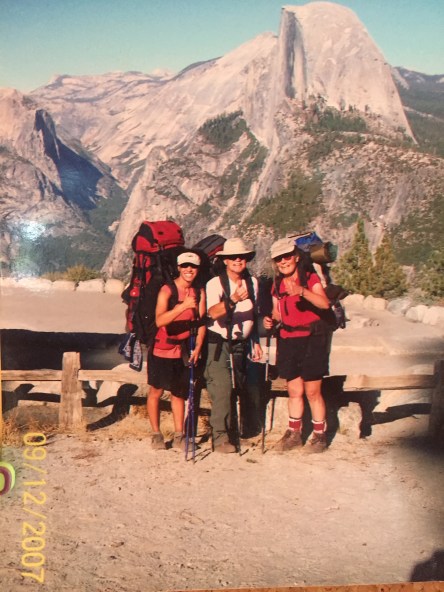
Wawona Point with Half Dome in the background

This was me (on the left) ten years ago. Before I knew my pancreas was no longer working. I look at myself now and I can see the disease. I can see how thin I was. At the time, I figured I was losing weight because I had been hiking and carrying a large pack all summer. This was the end of the season, and the couple and I had spent three days hiking to Little Yosemite Valley as a base camp for a one day summit of Half Dome. This picture was taken at Wawona Point where we had left the cars parked.

A friend (who has Lyme’s Disease, has restricted her gluten intake, and seen a drastic reduction in her body’s inflammation) said to me yesterday, “I can tell when I look at someone that they have inflammation and are swollen, just like I bet you can see if someone is diabetic.”

I love my friend. But I wanted to slap her for saying, and believing, something so incredibly stupid. Instead, I sighed and chose a response that wasn’t as snarky as my first impulse (“Yeah, right, because we all wear a bright fucking neon across our foreheads”)– I said, “I can’t tell if someone is diabetic unless I see them pull out a pancreas from their pocket.”

Simple, right? Sometimes it amazes me, and strikes me silent, when people share their

IMG_2239
Gardening with my MedTronic

deep ignorance of diabetes. I have personally only met FIVE other people in my life who  I know are Type 1, and only two were on a pump. I randomly met the two people  on pumps at a coffee shop and a bar here in Eugene during the past two years. They both were incredibly gratifying encounters. I dated a man a few years before I was diagnosed and I knew he was Type 1, but I never saw him take a shot. In fact, I only saw him check his blood once when we were stuck in traffic on a long road trip. I knew he carried his glucometer with him (I didn’t know that was what it was called) because he carried it in an old leather cigar case he had found, and I simply knew he always had that case with him. In the six months I dated him I never learned anything more about his diabetes. It never occurred to me that it meant anything.

I forgive my friend. She has no need to understand diabetes to the depth that I am required to. Her ignorance is my fault for not asking her to become more aware and educated when talking to me about my disease. I’ve done some cursory reading on the internet about her disease, and I ask her questions, but mostly I let her rant when she feels overwhelmed by the loneliness, anger, fear, and anxiety (that I am intimately familiar with from my own experiences) which accompanies a life-altering diagnosis.

I have struggled from the very beginning to control my blood sugar levels. When I first started my diabetic journey, I would hear healthcare professionals call me “uncontrolled.” I hate, HATEHATE that label. With a passion! I was personally offended every time I heard it because the only thought I had was:

“F*CK YOU! I am doing EVERYTHING I possibly F*CKING can to control this F*CKING disease. How dare you suggest I don’t control my health!?!?!”

I have come to realize that I prefer to be labeled as “brittle” or “labile.” It is important, I think, to realize and consciously accept the labels we choose to live with. The thoughts we think, and the feelings that support those thoughts, are the reality we experience.

I am not perfect. Not even close. I just shared a post on Facebook that stated, “World’s Okayest Diabetic.” Some days I do better than other days,

IMG_2192
Usually  I try to not go so high, but it obviously happens

but every single day, without fail, I am always intensely aware of the fact that I am diabetic, and it won’t go away, and I have no choice except how I choose to take care of myself. One of the earliest lifestyle changes I made was to not tell myself I “couldn’t” eat something, but to bargain with myself instead. If there are cookies at work and I want one, I simply have to forgo that pizza I thought I would have for dinner. Some nights I will even choose to eat cookies and have pizza for dinner! My mother raised a rebel!!


IMG_2257
So rare, but so exciting!

I do work very hard to keep my numbers as close to 120 as I can. It is a struggle that I wish I could walk away from. It is a way of life that I wish I did not have to live. It is a regimen of restrictions that I resent and sometimes refuse to acknowledge. But the truth is always the same: I am diabetic. I am insulin dependent. I am disabled.

I am in the process of trying to request what I consider to be “reasonable requests for accommodation” at work based upon my disability of having  a defunct pancreas. Mostly, I am hoping to emerge from under the oppression of being rumored as a bitch at work because people in other departments don’t know I am diabetic, nor do my bosses understand the extent of which my diabetes can affect my personality when my blood sugars are fluctuating. Like I said earlier, I have always been extremely brittle. My immediate boss simply believed the rumors of what a bitch I was because he knew I was on the pump and that was supposed to “cure” my diabetes. I had no idea he thought I was “cured.”

I live a life that makes me happy. It isn’t the life I thought I would be living when I was thirty. Nor does it resemble anything like the life I thought I would be living when I was twenty. Instead, it is the life I find myself living now that I am forty. I play soccer, drink beer, camp under IMG_2209the stars, eat out with friends, ride a bike everyday, grow my garden, practice my fiddle, and learn new ways of dealing with the depression that hounds me because of the diabetes. Everyday is an opportunity to learn something new about myself. Not everyone has the chance to test their willingness to stay alive and healthy. For most people it is a default. They simply have to wake up and get dressed and make it to work. There are no life and death moments in their daily existence. They know they are alive and that they will remain alive for at least the next twenty-four hours. It is not a struggle for them. I envy those people. But, at the same time, I wouldn’t trade places with them even if it meant having a pancreas that likes me enough to do its job on its own.