
I went to work at the pool because of Diabetes. I remained employed at the pool for nine years because of Diabetes. I allowed myself to suffer severe and pervasive harassment and discrimination for six years because of Diabetes.
Diabetes scares me more than the evil natural by-product of blind ignorance produced by the likes of Red, Fryer, Dale, Bill, Amanda, and every other individual working for the Park District combined ever possibly can. None of them can end my life. They have definitely made my life more difficult, stressful, unbearable, and unhealthy then it now is without them in it, but, with the help of the Park District, and my experience surviving there, I have finally learned how my diabetes works.
I first started this blog as a way to chronicle the shift of thinking about myself as being diabetic to thinking of myself as diabetic. It was a depth of acceptance that had eluded me for almost ten years. Reading back over my first few posts I can still read the frustration and anger resulting from my diagnosis in my words. I have managed to survive long enough to spend a quarter of my current lifespan as a diabetic. It is a trend I am hoping to continue for the next half of my life. Social survival at the pool was always secondary to the survival of my life.
The irony of insulin-dependent diabetes is equally as beautiful as the moment of handing Fryer the key while he was in his swim suit. But, I fear it is an irony that only people intimately involved with insulin are ever truly able to appreciate. For those of you reading who aren’t familiar with insulin, or Diabetes in general, I am going to spend the next couple hours (before my friend cooks me dinner tonight) briefly explaining the different ‘types’ of Diabetes so later I may hopefully be able to explain in detail the intricacy of insulin-dependent (or Type 1) diabetes, so you may have a better understanding of my disability and how I was able to be discriminated against for my disability at the pool by the administration of the Park District.
There are two types of Diabetes that are mentioned in the media, of which most people unassociated with the disease in general are aware of the one called Type 2, also usually labeled as ‘adult onset.’ It is the version of diabetes that most people have some kind of connection to, mostly with an older relative who has, or had, Diabetes. I prefer to label Type 2 diabetes as ‘insulin-resistant diabetes’ only because many people with it might be able to manage the disease with exercise, diet, and lifestyle changes. Insulin-resistant diabetes can even have a timeframe, early in the development of the disease (called ‘pre-diabetes’), when a person can ultimately (hopefully) erradicate the effects of the disease by simply changing what they eat, how much they eat, and with increasing their exercise. Insulin-dependent diabetes does NOT have an escape. It does not matter how much I change my diet or lifestyle, I will always be dependent upon insulin until the day I die.
Everyone (and I do mean EVERYONE) with insulin-resistant diabetes gets sick in their adulthood. Okay, wait . . . this might not truly be an honest statement. Especially with the increase in childhood obesity, because it is obesity, and sedentary habits, that are the crux of becoming an insulin-resistant individual. With obesity comes the body’s inability to utilize insulin correctly. The pancreas still merrily produces enough insulin to cover the body’s needs, but the cells become unable to use the insulin correctly. The simple explanation that comes in all the literature explaining Diabetes is that food is converted into glucose, which is the fuel that keeps our body and brain functioning. Cells need to use the glucose that ends up in our bloodstream to work. Period. Without glucose our body begins to fail and we die. Period. The problem with insulin-resistance is that the cells become unable to take in the fuel they need because insulin is the ‘key’ that unlocks the cell to allow glucose in. The cells are ‘resistant’ to the insulin produced by the body.
There, that is as technical as I’m going to get right now. To reiterate, insulin-resistance is when the pancreas produces insulin that the body’s cells are unable to use properly and the person gets sick. With the help of medication, an insulin-resistant person can begin to utilize the insulin within their body and become healthier. Exercise helps cells to utilize insulin. The more exercise, the less resistance.
Insulin-dependence is very different. First, the problem does not start with our lifestyle or body-type. Insulin-dependence begins when the immune system attacks the cells in the pancreas that produce insulin. The pancreas, in time, becomes unable to produce enough insulin for our bodies to stay alive. Before the discovery of insulin in the early 1920s, insulin-dependent (Type 1) diabetes was 100% fatal. It is an auto-immune disease, which insulin-resistant (Type 2) diabetes is not. It makes no difference how obese we are or how little we exercise. The unavoidable fact is that our pancreas NO LONGER PRODUCES INSULIN. Period. Without insulin we die. Period.
Now the explanation begins to become more complicated, and I’m not going to go deeply into details today, but there are soooo many more factors involving Diabetes then the two very simplified explanations that I’ve just provided. For one thing, there are more than two types of diabetes, the most other widely encountered version being gestational diabetes. But none of those versions affect me and how I manage to live with my diabetes. The two explanations I’ve provided above are the basic building blocks to begin understanding the manifestation of my diabetes, which, let’s be honest, is the whole point of this blog in the first place.
MY diabetes is labeled as Latent Autoimmune Diabetes in Adults (LADA). I have not been ‘officially’ diagnosed with LADA. My official diagnosis is Type 1 Diabetes (insulin-dependent). I was mis-diagnosed as Type 2 in the beginning because of my age being 32. Like I said earlier, it is adults who become sick with Type 2. Insulin-dependent diabetes used to have the more commonly known name of ‘juvenile diabetes’ because it was ALWAYS children who became sick with an autoimmune disease causing insulin-dependence. Juvenile-onset diabetes happens quickly. Within a matter of months, or even weeks, parents will watch their young child become lethargic, skinny, and sick. It is that first trip to the Emergency Room when they learn that their child is now diabetic and needs to manage being on insulin for the rest of their life. It is as close to a death sentance you can honestly receive while still being alive.
***Here’s the kicker: insulin is needed to stay alive, but take too much (just a drop too much) and you run the risk of seizure, coma, and death.***
The problem with Diabetes is that it allows your blood glucose levels to rise too high. Too much glucose floating around in the bloodstream will begin to destroy certain physiological structures. The most commonly kown side-effect of ‘diabetes’ is losing a foot. Or any appendage. High blood sugar destroys blood vessels. It restricts the ability for blood to flow in a healthy manner to the extremities. Amputations are a ‘common’ complication of Diabetes. High blood sugar can also cause blindness, heart disease, kidney failure, liver dysfunction, etc., etc. Since my diagnosis, I have noticed a distinct reduction in my ability to heal a simple cut on my leg without creating a nasty looking scar.
I need to wrap up my beginning of this chapter for today because I need to go home and get my fiddle ready to go to my friend’s house for a pleasant night of recitals and dinner. But I want to leave you with this one idea to ponder until tomorrow when I have time to finish this chapter: I have described two very different types of diseases that share a common name, but have distinctly different origins. One is a disease of the metabolism, while the other is autoimmune. Both of these diseases are deadly. Both can cause great and tremendous bodily harm. Both are emotionally traumatic to be diagnosed with. Both need constant and diligent attention to detail in order to manage living a ‘healthy’ life. They are different, but they are the same.
Tomorrow I will share some of the traits that both versions of Diabetes have in common, and how those commonalities affect me and my ability to learn how to survive living with insulin-dependent diabetes.
Have a wonderful evening!
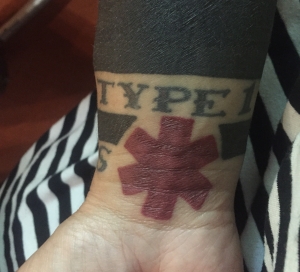
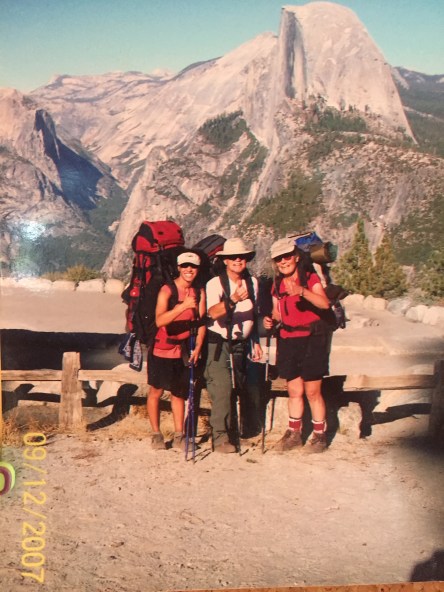

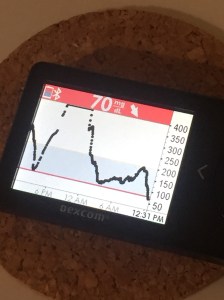
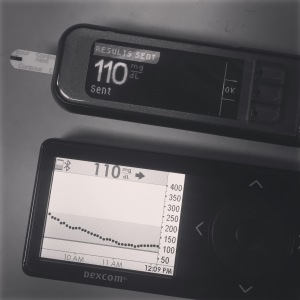
 the stars, eat out with friends, ride a bike everyday, grow my garden, practice my fiddle, and learn new ways of dealing with the depression that hounds me because of the diabetes. Everyday is an opportunity to learn something new about myself. Not everyone has the chance to test their willingness to stay alive and healthy. For most people it is a default. They simply have to wake up and get dressed and make it to work. There are no life and death moments in their daily existence. They know they are alive and that they will remain alive for at least the next twenty-four hours. It is not a struggle for them. I envy those people. But, at the same time, I wouldn’t trade places with them even if it meant having a pancreas that likes me enough to do its job on its own.





 The LADA Diva