
Low blood sugars can be scary. They certainly scare the hell out of me when I’m alone. A few weeks ago, I was walking to the store when I realized I was no longer walking in a straight line. My blood sugars had begun to drop so suddenly that my cgm was unable to keep up and give me a warning. By the time I made it to the street the store was on I could feel my thigh muscles begin to twitch–a sign that a seizure is close at hand. I had one applesauce packet with me in my purse and I swayed on the street corner sucking it down, praying I would make it through the parking lot without collapsing. There weren’t many cars out, but I stood on that corner for a few minutes staring at the one way street I wanted to cross, the one way cross-street with oncoming traffic, and the street lights trying to convince myself that it was safe to step out into the street and not get hit by a car. I was scared that I would be confused and step in front of a moving car by mistake. I had to chuckle, though, at the image of me standing on the corner, swaying like a drunk, and all the people in their cars hoping I wasn’t too drunk to step out in front of them suddenly.
I finally made it into the store and went straight to the bakery section. I knew where I was at the time, but I was unable to recognize my surroundings. Thankfully, I shop at that store often and I was able to subconsciously find my way to accessible carbohydrates. There was one chocolate donut in the bakery case and I reached in and put it in my mouth without pausing. I was into my second bite when I looked up and saw a young woman behind the counter staring at me with a look on her face. She asked if I needed help and I simply shook my head as I went for a third chunk of chocolate donut to stuff in my mouth. I thought about twisting my arm so she could see the med alert tattoo I have on the inside of my right wrist, but, even in the midst of confusion from a bad low, I knew it was useless to try and explain WHY I needed to eat that donut as if my life depended on it.
It has been years since I’ve had a low bad enough to incapacitate me, or cause me to be unable to administer a correction without assistance. Most of the time, I hate sharing these stories because I hate how they make the non-pancreatically challenged people around me react. Either I am bombarded with suggestions on what to do to take care of myself, or with suggestions on how to prevent it from happening again–all of which are useless because they come from people who have never had to count a single carb in their entire life. Friends, family, strangers on the street…it doesn’t matter who it is, I hate being told what I should be doing by people who are not diabetic.
So I joined some online diabetic communities thinking I would be able to connect with people who could easily understand what I am experiencing. Unfortunately, it isn’t that easy, even in the virtual world.
I joined the Latent Autoimmune Diabetes in Adults community on Facebook thinking I had finally found the population of diabetics who would understand me and my particular circumstances; not adults who had grown up fighting diabetes, and not parents of children who are fighting diabetes, but other adults who had to wake up one morning and start living their adult life as a diabetic. I thought the fact that people seemed to post questions and comments meant that I had found a way to connect with people who shared a compatible need for connection and communication. Instead, I found a community of people who seemed to whine as much as type 2’s: When will I have to start taking insulin? How do I prolong my honeymoon? What should I eat to not have to take insulin?
None of these questions concern me or my experience with diabetes. I was completely dependent upon insulin from the first moment I learned I was diabetic. My pancreas and I never had a honeymoon. I never had the option of eating anything that wouldn’t raise my blood sugars. Hundreds of diabetics from across the planet are able to connect with each other and share the experience of trying to avoid taking insulin with their food. I wish I could be one of them, but I never will be.
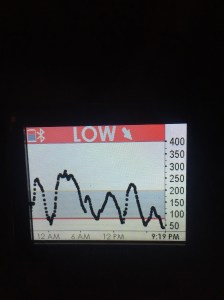
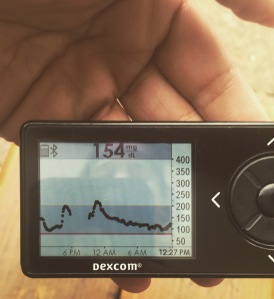
I posted one question to the community in search of other brittle diabetics like myself with a picture of my 24-hour graph showing extreme peaks and valleys in my glucose levels. I had a few people suggest I eat less carbs (without asking, of course, what my normal routine of low-carb cooking was) or suggest that I not eat so many carbs for a correction (not knowing that a 21g granola bar has the ability to send me from a 52 to 257 in less than thirty minutes). Again, I was simply receiving advice from people who are clueless, only this time they also have a malfunctioning pancreas–only their pancreas still works well enough to allow them the hope of thinking they may not need to become dependent upon insulin before the cure is found.
I didn’t get very many responses, and none of them truly helped to make me feel connected, but I did have one very interesting exchange. One woman had posted a picture of her 24-hour graph stating she “wasn’t very happy” with it: a long steady line that had a small bump going up to 175 and coming back down. My peaks had easily reached upwards of 350 and my valleys were down in the 50’s, so when I read her comment I wanted to smack her through the internet and hopefully knock some sense into her. Instead, I tried to be courteous by replying, “Damn! That looks good to me. I’m jealous!” Another women commented a few hours later berating the first woman for being so insensitive as to complain about her graph. I thought, “Finally! A chance to start a conversation!” but, before I could respond, the entire conversation thread was deleted. Great. So, not only am I still not connecting with people who are able to share similar experiences, but now some invisible and disconnected individual is censoring my post and disallowing me the opportunity to engage in a meaningful conversation that, at the very least, has the potential of increasing other people’s awareness and perceptions about diabetes.
I have finally come to accept that there is most likely not another diabetic in the world who can easily comprehend or share in the particularities of my personal brand of diabetes. As much as the memes try to remind me that I am not alone, I nevertheless feel very lonely in a world where my experiences are incomprehensible to everyone else. For example, last night I went out for dinner and drinks with a good friend and I slightly overestimated my carb count for the calamari.
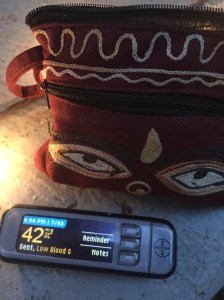
By nine o’clock my cgm started vibrating and beeping while we sat next to the fire in my yard. I was at 42 and felt perfectly fine. I started counting backwards from 100 by three’s and didn’t miss a beat. I told my friend I should maybe count back by four’s since I’m used to testing my coherency with three’s–I still did not have a problem doing the math. I started ranting about how frustrating it is to be so damn low and not feel a single symptom to give me a warning. I went inside and pulled out my stash of emergency carbohydrates: applesauce and dried fruit. I wasn’t the slightest bit hungry since I had eaten a full meal earlier at the restaurant but I drained the applesauce packet while ranting about the need to eat when I’m not hungry, and the fact that I have to waste so much garbage by using single serving pouches to accurately control my carbohydrate intake. This is not how I want to live my life, but what choice do I have if I want to stay alive??
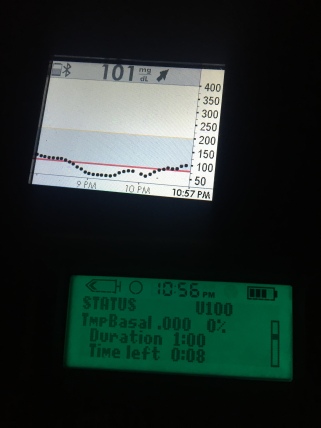
My blood sugar slowly rose up from the applesauce and I never suffered any confusion, loss of balance, or twitching muscles. My friend was scared because my numbers were so damn low, and I could tell I was acting a little erratically, but, overall, it was a hypoglycemic event that wasn’t much of an event at all. Definitely not the kind of hypoglycemic event that would have occurred for other diabetics who were to drop so low. Or, maybe, there are others out there like me; people who suffer alone, and in silence, thinking they are the only diabetic whose diabetes does not operate the way every medical professional who treats diabetes says it should. Maybe, just maybe, I’m not alone either. Maybe I’m not the only brittle diabetic who can accurately count backwards from 100 by three’s or four’s while suffering a severe hypoglycemic event.
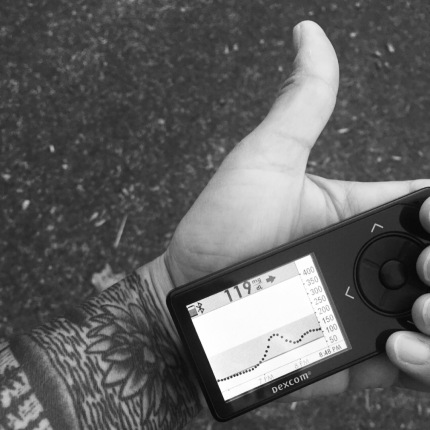
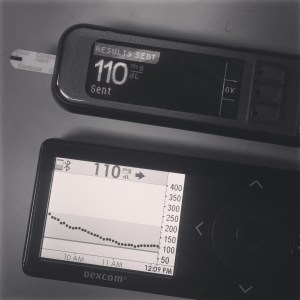
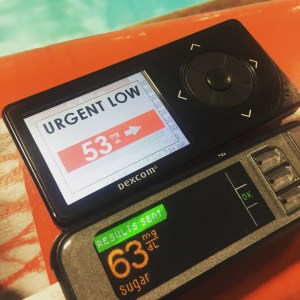 to wear it continuously. At first, it was because I wanted to continue enjoying an undisturbed night of sleep. Then, there was the frustration that came from having the damn alarm scare the crap out of me with a reading of 43 only to learn I was actually at 65. They may both be scary to most people, but, for me, being in the 60s isn’t much of a concern. I have always had a high tolerance for a low blood sugar. It has saved my life on numerous occasions, so I have learned to not question, but simply to accept with joy.
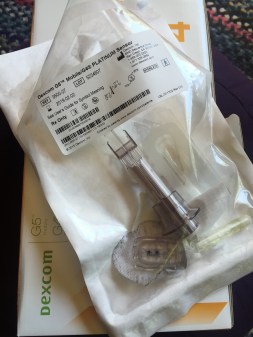
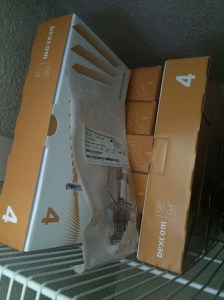 Finally, a day came when I looked in my closet and I saw enough boxes of sensors to make me feel secure. I felt comfortable in knowing I could wear my cgm continuously and not worry about running out of supplies. One other key revelation helped me to feel the sense of security that allowed me to let go of my need to control the amount of sensors I had on hand: I learned how to make a sensor last for longer than seven days!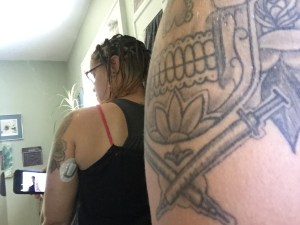
 The LADA Diva